



When did you last ask ChatGPT, Perplexity, or Google’s AI overview for a recommendation? Maybe you were looking for a restaurant, researching a product, or trying to find a local service. If you’re anything like most people, it was probably within the last week.
Here’s the thing: your customers are doing exactly the same. And if your business isn’t showing up in those AI-generated answers, you’re becoming invisible to a growing number of potential clients.
The Shift from Search Results to AI Answers
For years, SEO has been about one thing: getting your website to rank on Google’s first page. You optimise your content, build some links, and hope to appear in those ten blue links that searchers scroll through.
AI SEO – sometimes called GEO (Generative Engine Optimisation) works differently. Instead of ranking in a list, the goal is to be cited or mentioned when AI tools answer questions directly. The AI reads thousands of sources, synthesises the information, and delivers a single, conversational response. If your business gets mentioned in that response, you’ve essentially received a personal recommendation.
Think of it this way: traditional SEO is like being listed in the Yellow Pages. AI SEO is like being the business that gets recommended by a trusted friend.
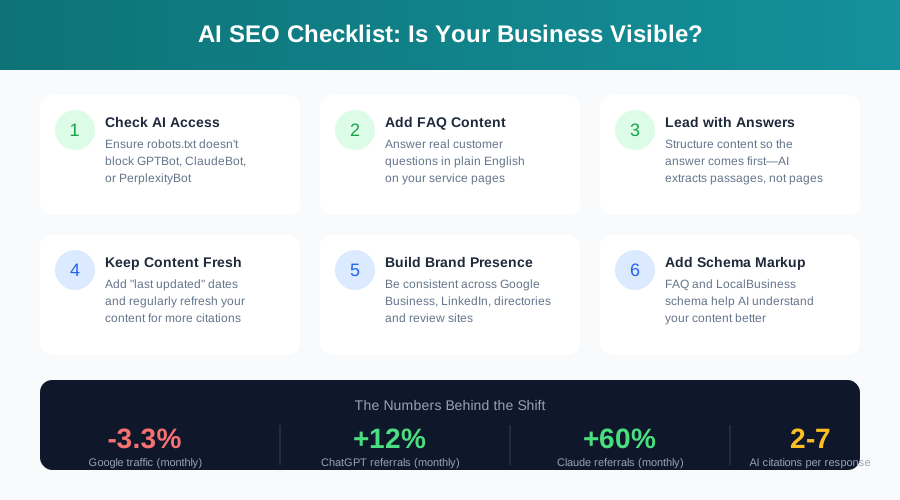
The numbers tell a compelling story. Google traffic has been declining by around 3.3% month-on-month on average, whilst ChatGPT referral traffic is growing by nearly 12% month-on-month. AI tools like Claude have seen referral growth of over 60%, albeit from a smaller base. Perhaps most significantly, AI systems typically cite only two to seven sources per response, compared to Google’s ten results. The competition for those few citation spots is becoming fierce.
Why This Matters for Your Business
Let’s make this concrete. When someone asks ChatGPT “Who’s the best plumber in South London?” or “How much does a new boiler cost?”, will your business be mentioned?
AI doesn’t just list websites. It recommends and explains. Being cited is like receiving a personal endorsement from a knowledgeable adviser. That carries far more weight than simply appearing in a list of search results.
The good news? Competition for AI visibility is currently low. Most businesses haven’t even considered this yet. Early movers have a genuine advantage, and it won’t last forever.
What We’ve Learned at Webshape Design
At Webshape Design, we’ve been researching this shift over the past few months. We’ve integrated AI SEO analysis into our research and audit processes, and what we’ve discovered has been eye-opening.
Many businesses are completely invisible to AI systems. Their content gets crawled but never cited. Some are accidentally blocking AI crawlers in their robots.txt file without even realising it.
The websites that do get cited tend to share specific characteristics: clear, direct answers to common questions; well-structured content with proper headings; FAQ sections with schema markup; recently updated content with visible dates; and a strong brand presence across multiple platforms.
We’ve seen cases where competitors with weaker traditional SEO are outperforming established businesses on AI visibility, simply because they’ve structured their content in a way that AI systems can easily extract and cite.
Practical Steps You Can Take Today
Check if AI can access your site. Make sure your robots.txt file doesn’t block GPTBot, ClaudeBot, or PerplexityBot. You might be invisible without knowing it.
Add FAQ content to your service pages. Answer the questions your customers actually ask, in plain English. Think about what someone might type into ChatGPT when looking for your services.
Structure your content for Snipp ability. Lead with the answer, not a lengthy introduction. AI extracts passages, not entire pages. If someone asks a question, make sure your content answers it in the first paragraph.
Keep content fresh. Add “last updated” dates and actually update your content regularly. Recently updated content earns significantly more citations from AI systems.
Build your brand presence. Consistent mentions of your business across Google Business Profile, LinkedIn, directories, and review sites help AI systems recognise you as a legitimate, trustworthy entity.
Add schema markup. This helps AI systems understand what your content is about. FAQ schema and Local Business schema are particularly valuable for trades businesses and local services.
What We’re Doing for Our Clients
We’ve now built AI SEO analysis into our standard website audits and campaign planning. When we research a new project, we don’t just look at Google rankings we analyse AI visibility too. This helps us identify opportunities that traditional SEO tools miss and ensures our clients are prepared for where search is heading.
Looking Ahead
Let me be clear: this isn’t about Google dying. Traditional SEO still matters and will continue to matter for the foreseeable future. But the landscape is diversifying. People are using multiple tools to find information, and businesses that adapt early will have an advantage over those who wait.
If you’re curious about how visible your business is to AI systems, we’re happy to take a look. It’s a quick check that can reveal whether you’re being found, being ignored, or actively being blocked. Drop us a message and we’ll let you know where you stand.
Read More:
Frequently Asked Questions
AI SEO (also known as GEO or Generative Engine Optimisation) is the practice of optimising your website and content to be cited and mentioned by AI tools like ChatGPT, Claude, Perplexity, and Google’s AI overviews when they answer user questions.
No. Traditional SEO remains important for Google rankings. AI SEO is an additional consideration that ensures your business is visible across all the ways people now search for information.
Check your robots.txt file to ensure you’re not blocking AI crawlers like GPTBot, ClaudeBot, or PerplexityBot. You can also test by asking AI tools questions that your website should be able to answer and seeing whether you get mentioned.
AI systems favour content that directly answers questions, is well-structured with clear headings, includes FAQ sections with schema markup, has been recently updated, and comes from businesses with a strong, consistent online presence.
Yes. When customers ask AI tools things like “Who’s the best plumber near me?” or “How much does a new boiler cost?”, the answers draw on only a handful of sources. Few small businesses have optimised for AI visibility yet, so local firms and trades that act now can gain an early advantage over larger competitors.
Schema markup is code added to your website that tells search engines and AI systems what your content is about, for example that a page contains FAQs or that your business serves a particular area. FAQ schema and Local Business schema make it easier for AI tools to understand, extract and cite your content accurately.